

Back to School Etiquette
A Mannerly Guide to practice with your child before the first day

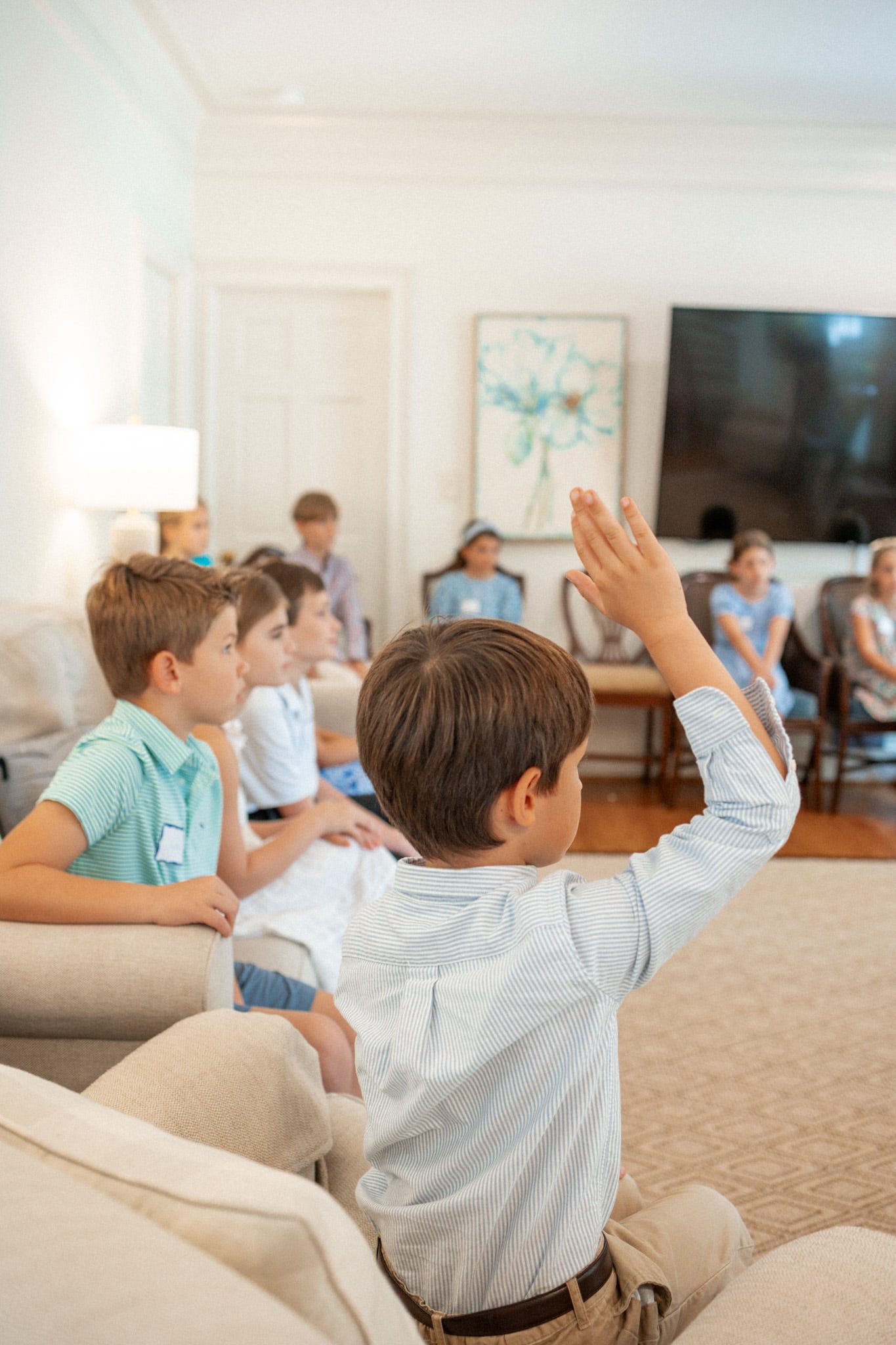
Some of my earliest memories are of my mother’s etiquette conventions.
I do not know how young I was the first time I joined her. Based on the pictures, maybe seven or eight or nine. I was somewhere in elementary school, and I do remember Third Eye Blind in the lobby one year, which felt cool.
She held the convention once a year, at a beautiful resort, over several days. Hundreds of women and men attended, all of them teaching the etiquette curriculum she wrote in their own cities.
Throughout the convention I would stick to my mom’s side as often as I could. I always felt big when I was with her. Which meant she would often turn to me and say:
“Please introduce yourself.”
And I would smile, extend my right hand, and say:
Hi, I’m Elizabeth Anne. It’s nice to see you.
Side note: it was my mom’s rule to always say nice to see you, because you never want to say nice to meet you to someone you have already met.
Her friends would ooh and ahh. Your daughter is so polite. So well spoken. So confident.
In reality, I was just doing what we had practiced many times at home (and out in public). It felt as natural as blinking, and I did not think much of it until more recently.
It is definitely not because I was a naturally extroverted, highly confident child. Quite the opposite actually.
The introductions felt natural because the rehearsal came first.
My children will not be attending a convention this month. They will be going back to school, walking into rooms of teachers and peers they have yet to meet, and it is the same thing in a different room. Another low stakes chance to practice first impressions, with a clean slate and new friends on the other side of it.
“Introduce yourself”
“Introduce yourself” is the most common piece of social coaching parents give.
It is a lot to ask. A child is put on the spot, in front of an audience, to do something she has maybe done a few times before.
I work with hundreds of students each year, and watching them confidently make progress in their introductions is one of my favorite parts of the job. It simply takes practice, and it is an honor to reinforce the good manners you are already teaching at home.
Social skills take practice, just like anything else worth getting better at. Nobody questions it in academics, sports, music, or art. Etiquette is the one place we expect it to arrive on its own.
A note before we begin. None of what follows is only for children. These are the rules for meeting anyone, at any age. Walking into a room where you know no one, joining a conversation already in progress, saying the right thing to a person you have met before but cannot quite place. These are situations I am still working on.
August happens to be when the youngest among us face all of it at once, which is why I wanted to share this now. If you do not have children going back to school, read it for yourself. The client dinner, the industry conference, the first day at a new job. Same modern etiquette rules.
I am teaching sixteen etiquette classes next week, here in Charlotte, which is why this is on my mind. It is the right week to begin preparing for the year ahead.
What follows are the seven modern etiquette lessons I am teaching my own children before the new school year, the research behind them, and how we will rehearse each one before the first day, so that introductions feel more like blinking.
The rest of this guide is for paid subscribers.
Seven modern etiquette rules to prepare for the first day of school, backed by published research where it exists.